
Heat Reduction - The Primary Benefit for UAE Homeowners
The single most impactful benefit of window tinting in the UAE is heat reduction. With summer temperatures routinely exceeding 45°C and direct sunlight beating down on glass surfaces for 10-12 hours a day, untreated windows are the largest source of heat gain in any home. Solar radiation passes through clear glass and heats interior surfaces - floors, walls, furniture - turning your living spaces into a greenhouse that your air conditioning system struggles to cool.
High-performance heat rejection window film blocks up to 80% of solar heat before it passes through the glass. The difference is noticeable immediately after installation. Rooms that were previously uncomfortable during afternoon hours become pleasant living spaces. The thermostat does not need to be set as low, and the air conditioning cycles less frequently because the thermal load entering the home has been dramatically reduced.
The practical impact on daily life is significant. West-facing bedrooms that were unusable during afternoon hours become comfortable. Living rooms with large glass walls no longer develop hot spots near the windows. Home offices facing direct sunlight become productive workspaces rather than sweltering boxes. For many UAE homeowners, heat rejection film transforms rooms they had essentially written off back into functional, comfortable living areas.
The effect compounds across the entire home. When every window in the house rejects 80% of solar heat, the cumulative reduction in thermal load means your HVAC system runs more efficiently, lasts longer, and consumes significantly less electricity. DEWA's cooling conservation guidelines confirm that reducing solar heat gain through windows is one of the most effective steps residents can take. The house reaches its set temperature faster and maintains it with less effort - a benefit you feel in comfort and see on your electricity bill.
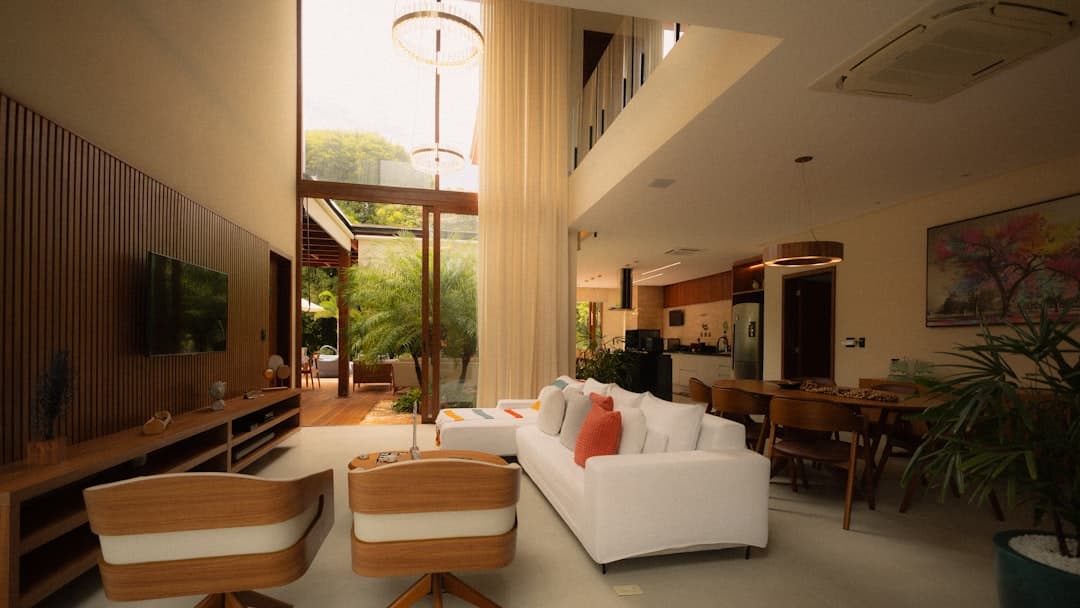
UV Protection - Preserving Your Interior Investment
Ultraviolet radiation is invisible but enormously destructive. In the UAE, where the UV index exceeds 8+ for the majority of the year, unprotected interiors suffer visible damage within months. Hardwood floors bleach and lose their colour. Leather sofas crack and fade. Fabric curtains and upholstery lose vibrancy. Artwork, photographs, and decorative items degrade steadily under constant UV bombardment.
The financial impact is substantial. Replacing a faded leather sofa costs AED 10,000-30,000. Refinishing hardwood floors runs AED 5,000-15,000. Replacing sun-damaged curtains throughout a villa can cost AED 8,000-20,000. These are expenses that recur every few years when interiors are left unprotected - far exceeding the one-time cost of window film installation.
Professional window film blocks up to 99% of UV radiation, effectively eliminating the cause of interior fading and degradation. The Skin Cancer Foundation recommends window film as a practical measure for reducing indoor UV exposure. Your furniture, flooring, artwork, and soft furnishings retain their colour and condition for years longer than they would without protection. This preservation applies to everything in the room - not just items in direct sunlight, because UV radiation scatters and bounces off surfaces, affecting the entire interior space.
UV protection also has health implications. The World Health Organization classifies UV radiation as a Group 1 carcinogen, and prolonged UV exposure through windows contributes to skin ageing and increases the risk of skin-related health concerns. For families spending significant time at home - working, studying, or simply relaxing near windows - UV-blocking film provides an invisible layer of protection for both your possessions and your wellbeing.
Want to know what this costs for your home?
Free on-site assessment. We reply within 30 minutes.
Privacy - Comfortable Living Without Compromise
Privacy is a fundamental concern for homeowners in the UAE, where architectural trends favour open layouts, floor-to-ceiling glass, and ground-floor living spaces that are visible from streets, pathways, and neighbouring properties. Traditional solutions - curtains, blinds, and shutters - solve the privacy problem but create new ones: they block natural light, obstruct views, and make rooms feel smaller and darker.
Window film offers an elegant alternative. One-way reflective film creates a mirror effect on the exterior side of the glass during daylight hours, allowing you to see out clearly while appearing opaque to anyone looking in. Your home stays bright and open, your views are unobstructed, and your privacy is complete - without drawing a single curtain. For a detailed breakdown of mirror film options, see our mirror tint Dubai guide.
For spaces that require 24-hour privacy regardless of lighting conditions - bathrooms, dressing rooms, ground-floor bedrooms - frosted and decorative films provide a permanent solution. These films diffuse light beautifully, creating a soft, even glow in the room while completely obscuring the view from outside. They are available in a range of patterns and textures, from simple frost effects to geometric and botanical designs that add a decorative element. Our frosted window film guide covers the full range of options.
In villa communities across the UAE, privacy film is particularly valuable for ground-floor living rooms, poolside windows, and garden-facing glass. These areas are often visible to neighbours, pedestrians, and household staff from adjoining properties. Film provides the seclusion you need for comfortable living while maintaining the architectural openness that makes villa living appealing. For bedrooms and home cinemas where total darkness is required, see our blackout window film guide.
Energy Savings - A Measurable Return on Investment
In the UAE, cooling accounts for an estimated 60-70% of residential electricity consumption. The primary driver of this cost is solar heat gain through windows - and window film addresses it directly. By blocking up to 80% of solar heat before it enters the home, window film reduces the thermal load on your air conditioning system, which translates into measurable savings on your electricity bill.
Most UAE homeowners see a 20-30% reduction in cooling-related electricity costs after window film installation. For a villa paying AED 2,000-4,000 per month on DEWA or SEWA during summer, that represents AED 400-1,200 in monthly savings during peak cooling months. Annualised across the year, the savings typically amount to AED 3,000-8,000 depending on property size and glass area.
The payback period is compelling. A typical villa window tinting installation costs AED 4,000-12,000, meaning most homeowners recover their investment within 1-3 years through energy savings alone. After that, every year of savings is pure return. With window film lasting 10-15 years before replacement, the lifetime savings can be five to ten times the initial investment.
Beyond electricity bills, reduced cooling demand extends the life of your HVAC equipment. Air conditioning systems that run less frequently and under lower load require less maintenance, experience fewer breakdowns, and last longer before needing replacement. Given that AC replacement costs in the UAE range from AED 5,000-15,000 per unit, this secondary benefit adds further financial value to the window film investment.
Interior Protection and Comfort - The Quality of Life Factor
Beyond the measurable benefits of heat reduction and energy savings, window film improves the day-to-day quality of life in your home in ways that are harder to quantify but immediately noticeable.
Glare reduction is one of the most appreciated benefits, especially for families who work or study from home. Direct sunlight creates harsh glare on laptop screens, televisions, and tablets, forcing you to close curtains or reposition furniture to use devices comfortably. Anti-glare window film reduces visible glare by up to 85% while maintaining natural light levels, so you can work, watch, and browse without squinting or straining your eyes.
Temperature consistency throughout the home is another improvement that residents notice immediately. Without window film, rooms on the sunny side of the house can be 5-8°C warmer than rooms on the shaded side, even with air conditioning running at full capacity. This inconsistency forces you to overcool some rooms to make others comfortable. Window film equalises the thermal performance of all your windows, creating a more uniform temperature throughout the home and eliminating hot spots near glass surfaces.
Safety is an underappreciated benefit of certain window films. Safety and security film - a thicker, reinforced product - holds glass together on impact. If a window breaks due to accidental impact, wind-borne debris, or attempted break-in, the film prevents the glass from shattering into dangerous shards. For homes with young children, this safety feature provides genuine peace of mind.
For Dubai and Abu Dhabi villa owners specifically, the comfort dividend compounds across the full property. West-facing majlis rooms, poolside lounges with glass walls, and rooftop terraces with glazed enclosures all suffer disproportionate heat gain without film treatment. These are precisely the spaces where families gather in the evening - and precisely the spaces that become unusable for hours at a time during summer. Treating these key social areas with high-performance ceramic film restores them to comfortable, liveable spaces for the entire year, not just the cooler months.
Property managers and landlords across the UAE are increasingly installing window film as a pre-tenancy upgrade. Tenants consistently rank interior comfort and lower utility bills among their top priorities when choosing between comparable properties. A villa or apartment with professionally installed heat reduction film commands stronger rental interest and can support rental premiums of 5-10% compared to untreated properties in the same community - a return that pays back the installation cost within the first lease cycle.
Finally, window film protects against the subtle but cumulative effects of solar exposure on building materials. Wooden window frames, paint finishes, and sealants all degrade faster under intense UV and heat exposure. By filtering out UV radiation and reducing surface temperatures on the glass, window film helps preserve the structural and cosmetic integrity of your windows and their surroundings. For properties that are 5-10 years old and beginning to show signs of sun-related wear, film installation combined with routine maintenance significantly extends the period before expensive refurbishment is needed. See our professional home tinting service guide for details on what a full installation covers and what to expect from the process.