
Understanding Window Film Types
The residential window film market offers several distinct product categories, each engineered for a specific purpose. Understanding these categories is the first step toward making an informed choice for your home.
Heat rejection film (also called solar control film or ceramic film) is the most popular category in the UAE. These films are engineered to block infrared radiation - the portion of the solar spectrum responsible for heat - while allowing visible light to pass through. The best ceramic films reject up to 80% of solar heat without significantly darkening the room. They are available in various light transmission levels, from near-clear options that are virtually invisible to darker tints that also reduce glare.
Privacy film creates a one-way mirror effect during daylight hours, allowing you to see out while preventing others from seeing in. This is achieved through a metallic or nano-ceramic reflective layer that mirrors exterior light. Privacy films also provide heat rejection as a secondary benefit, though their primary purpose is visual screening. It is important to note that one-way privacy film relies on a light differential - it works during the day but reverses at night when interior lights are on, so curtains are still needed for evening privacy.
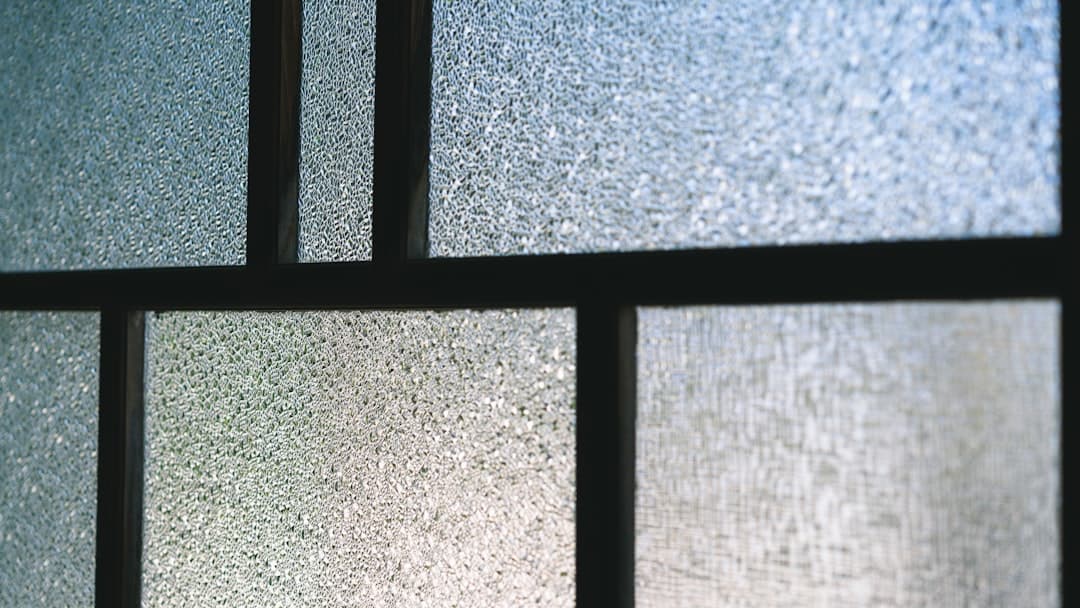
Frosted and decorative film provides permanent privacy regardless of lighting conditions. These films diffuse light rather than reflect it, creating a soft, translucent effect similar to etched or sandblasted glass. They are ideal for bathrooms, dressing rooms, and any window where 24-hour privacy is required. Decorative films are available in patterns, gradients, and custom designs.
Safety and security film is a thicker, reinforced product (typically 4-12 mil) designed to hold glass together on impact. It does not prevent glass from cracking, but it prevents the broken pieces from scattering - protecting occupants from injury and adding a layer of resistance against forced entry. Safety film can be combined with heat rejection properties for dual-purpose protection. For independent performance ratings, the National Fenestration Rating Council (NFRC) provides standardised testing data on window films, and the International Window Film Association maintains comprehensive buyer resources.
Room-by-Room Recommendations
Different rooms in your home have different needs, and a thoughtful window film strategy addresses each room's specific challenges rather than applying a single film throughout.
Living rooms and family rooms are typically the largest glass areas in a home and the primary gathering spaces. These rooms benefit most from high-performance heat rejection film, particularly on south- and west-facing windows. Choose a film with high visible light transmission (50-70%) to maintain brightness and openness. If the living room faces a neighbouring property or public area, consider reflective privacy film that also provides heat rejection.
Bedrooms require a balance of heat rejection, light control, and privacy. West-facing bedrooms are particularly challenging in the UAE because they receive intense afternoon sun that heats the room right before bedtime. Heat rejection film on bedroom windows keeps the room cooler in the evening, reducing the AC burden during sleeping hours. For bedrooms that face other buildings or streets, frosted film on lower panes combined with clear heat rejection film on upper panes gives privacy where needed without sacrificing daylight.
Bathrooms and en-suites are the highest-priority privacy rooms in any home. Frosted film is the standard solution - it provides complete visual screening while allowing soft, diffused natural light to enter. This is far more attractive than opaque glass or perpetually drawn blinds, and it eliminates the mould and moisture issues that fabric blinds develop in humid bathroom environments.
Home offices and study rooms benefit primarily from anti-glare film. If you work from home, direct sunlight on your screen is a daily frustration. Anti-glare film reduces visible glare by up to 85% while maintaining natural light levels, creating a comfortable workspace. Combined with heat rejection, it keeps the room cool and productive throughout the working day.
Kitchens with windows above countertops or breakfast areas benefit from heat rejection film that keeps the cooking and eating areas comfortable. UV-blocking film also protects wooden cabinetry and countertop materials from sun-induced fading and discolouration.
Want to know what this costs for your home?
Free on-site assessment. We reply within 30 minutes.
Climate Considerations for the UAE
Choosing window film in the UAE requires understanding how the local climate affects both the film's performance and your home's thermal dynamics. The UAE presents one of the most demanding environments for window film anywhere in the world, and products that perform adequately in temperate climates may underperform here.
Solar intensity in the UAE is extreme. The UV index reaches 11+ during peak summer months, and total solar energy striking your windows is 30-50% higher than in European or North American cities. This means heat rejection performance matters more here than almost anywhere else. A film rated at 60% heat rejection in a testing laboratory delivers proportionally more real-world benefit in the UAE than the same film would in London or New York, because there is simply more heat to reject.
Humidity is another factor, particularly for coastal properties in Dubai, Abu Dhabi, and Sharjah. High humidity can affect film adhesion if the installation environment is not properly controlled. Professional installation in a clean, temperature-controlled setting - or at minimum during the cooler morning hours - ensures proper bonding between the film and glass. This is one of the key reasons why professional installation matters in the Gulf climate.
Thermal stress on glass is a consideration that many homeowners overlook. Certain dark or highly absorptive films can increase the temperature of the glass itself, potentially causing thermal stress cracking in some types of tempered or laminated glass. A professional installer will assess your glass type and recommend compatible films that provide maximum performance without risking glass damage. This is particularly important for large, single-pane windows and older properties where the glazing specifications may not be immediately known.
Wind-driven sand and dust are constant challenges in the UAE. While window film is applied to the interior surface of the glass and is not directly exposed to sand abrasion, the exterior glass surface should be maintained regularly to prevent accumulated grit from affecting the visual clarity of the tinted window. We advise homeowners on maintenance routines that preserve both the glass and the film for maximum longevity.
For homeowners specifically focused on reducing heat in UAE villas and apartments, our heat rejection film for home guide goes deeper on performance specifications — TSER ratings, VLT percentages, and how to read manufacturer datasheets. For a broader view of what the complete installation process looks like, the home tinting service guide covers consultation through aftercare in plain language.
Budget Planning and Value Considerations
Window film pricing varies based on the product type, the total glass area, and the complexity of the installation. Understanding the cost structure helps you plan a budget that delivers the best value for your home.
Heat rejection film is the most cost-effective category on a per-square-foot basis, starting from AED 45 per square foot for professional-grade ceramic film. For a typical UAE villa with 20-30 windows, a whole-home heat rejection installation ranges from AED 4,000 to AED 12,000. Given the 20-30% reduction in cooling costs, this investment typically pays for itself within 1-3 years.
Privacy film starts from AED 35 per square foot and is usually applied selectively - to ground-floor windows, bathroom glass, and rooms facing other properties. A targeted privacy film installation for a villa might cost AED 1,500-4,000, focusing only on the windows where privacy is needed.
Safety and security film is the most expensive category due to the thicker, reinforced construction. Prices start from AED 55 per square foot. Most homeowners apply safety film selectively to ground-floor windows and glass doors rather than the entire house, keeping the cost manageable while protecting the most vulnerable entry points.
A practical approach is to prioritise your investment by impact. Start with heat rejection film on the sun-facing windows that cause the most discomfort and energy waste. Add privacy film where needed. Consider safety film for vulnerable ground-floor glass. This phased approach lets you spread the cost while addressing the most pressing issues first. Many of our clients start with the most problematic rooms and return later to complete the rest of the house once they have experienced the difference.